Please remember to access the videos included in this post through the Blog on the Liddells website: www.liddells.co.uk
1st August
There are power lines running across Liddells. John and Clare receive the princely annual sum of just under £40 for acting as generous hosts. Most years the lines have been checked to see that there are no trees growing up and compromising them. Some years this has involved some pruning. This year the pruning was very thorough. Clare wonders if the power company was seeking to save money by carrying out about three years’ worth of pruning. A Hawthorn hedge at the base of the Crag was topped for the first time ever and several Oaks in the NE Strip were considerably reduced in height. The Oaks were probably planted by the previous owner, which suggests they are 20-30 years old and possibly planted without thought for their ultimate height. Clare and John have on a handful of planting occasions, had to resite a tree when they realised it would grow up to foul the lines.
The work is necessary and the trees will recover, if not into their expected shape.
The Scrub camera captured a Spotted Flycatcher hunting in the space around one of the paths. Although the detail of the bird itself isn’t great, the video does show its characteristic habit of dashing out to grab a flying insect and returning to the same perch. Their conservation status is Red. Good to know that thus far they are maintaining a presence on Liddells.
2nd August
There are a lots of birds foraging on the ground in the Scrub at the moment. Most of them seem to be Blackbirds, although the next video shows a Thrush. It might be a Song Thrush, however the blotches on its breast are quite large and dark, and so Clare wonders if it might be a juvenile Mistle Thrush.
6th August
Ruth conducted another ringing session and was pleased to have a young male Redstart and a ‘tiny barely fledged’ Goldfinch. There was also a young Whitethroat - even though they arrived late this year, it seems that they were able to breed successfully.
7th August
A bonus from the tree work is some piles of chip. The workers helpfully kept soft and hardwood chip separate (softwood chip is quicker to decompose), so Clare bagged - in both senses - the hardwood chip to top up the steps over the Point of View.
Clare was delighted that one of the Musk Mallows she had grown from seed had flowered. She has sown hundreds of these seeds and they seem to do well initially, then fail to thrive in the longer term. She hopes this one has a longer term.
With another visit planned for 19th, Clare started to work her way along the all the paths making as sure as she could be that they are free from intruding Hawthorn, Gorse and Bramble, and removing any trip hazards from Brambles which have a habit of growing along the ground through the grass and setting root, creating a perfectly hidden loop into which to catch a boot. Clare worked on the bottom path into the Scrub and was pleased to find several baby Oaks and a Holly. The Oaks will almost certainly have come from acorns abandoned by Jays as there are no Oaks in the Scrub. The photos will give you an idea of size. And evidence of Clare’s work.
At night a ghostly-looking Tawny Owl flies across the Scrub camera.
11th August
Clare tackled the Top Strip path and was enchanted to find how a tree stump had been colonised by opportunists. A Foxglove, a Fern, an Oak, a Sycamore and a Birch have all all taken root on the small area. Clare was reminded of the Edward Lear poem:
‘There was an old man with a beard, / Who said, “It is just as I feared! / Two Owls and a Hen, four Larks and a Wren, / Have all built their nests in my beard.’
Stumped for choice
John worked hard to strim a path round the NE Strip and then relaxed with some photography.
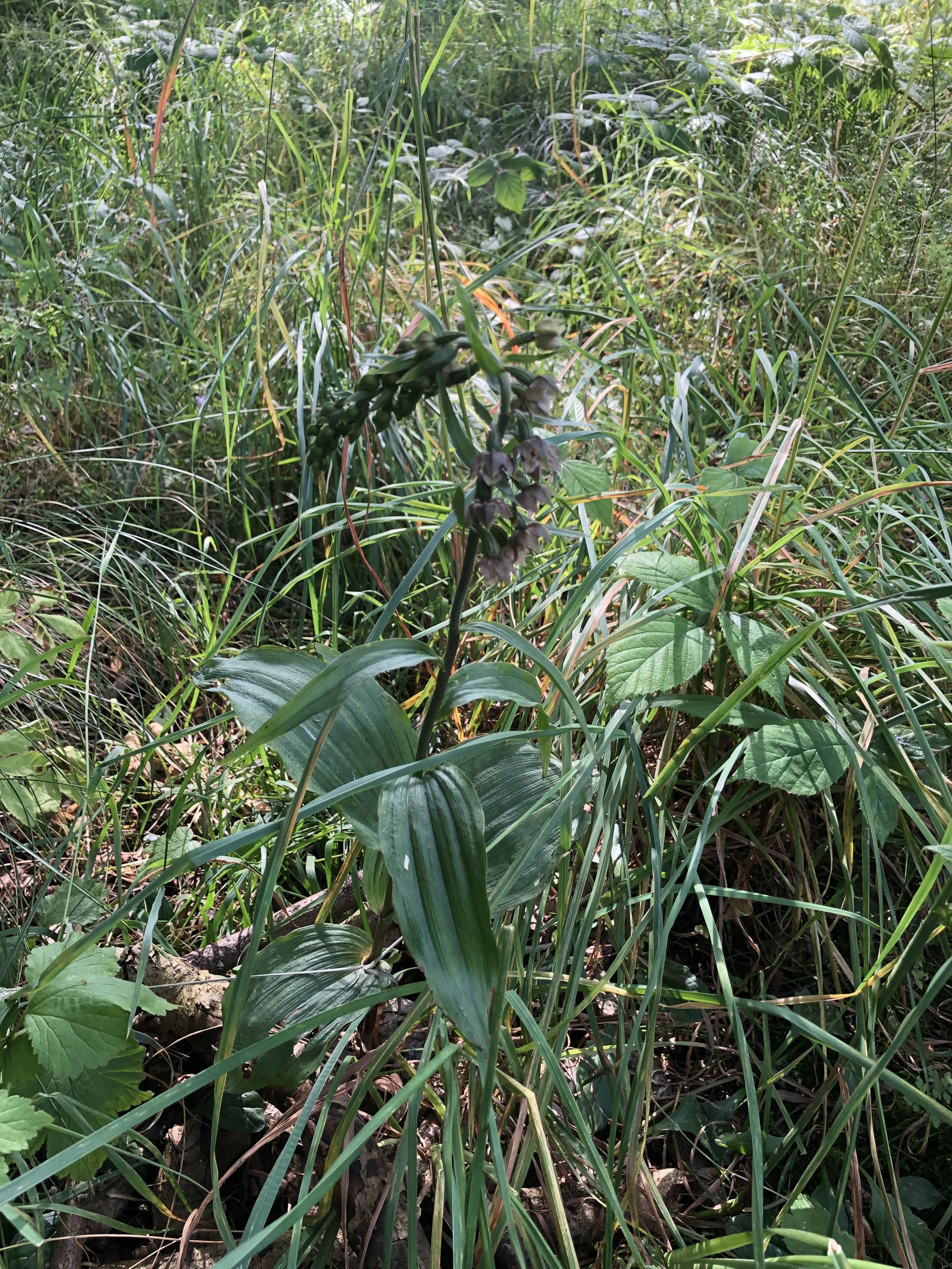
Heather in abundance on the Crag
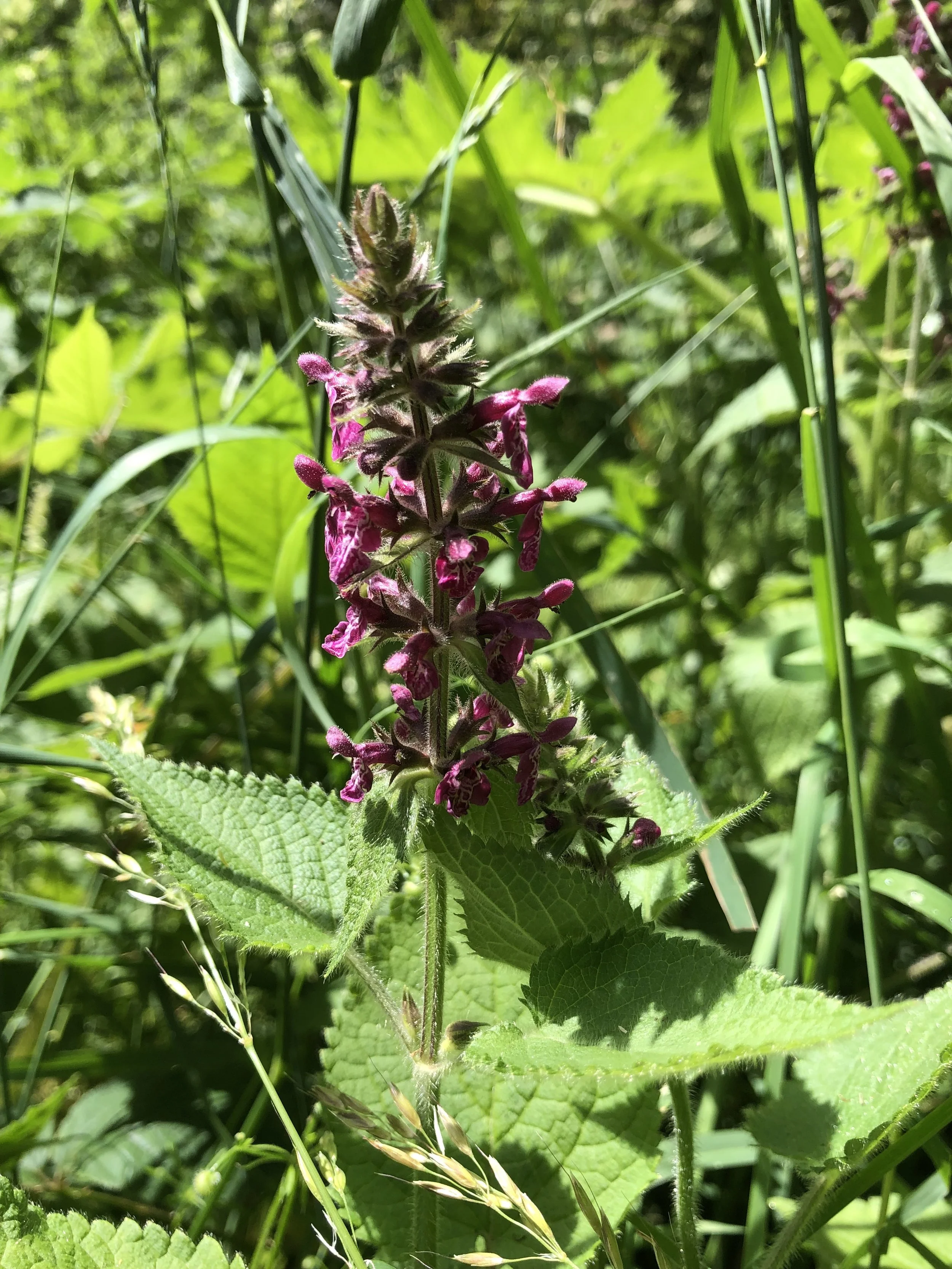
Betony
Guelder Rose berries
The first full size apples from planting in the Orchard a few years ago. These are James Grieve, an old variety. It gets its name from its breeder, James Grieve, who raised the apple from the pollination of a Pott's Seedling with a Cox's Orange Pippin apple in Edinburgh, Scotland some time before 1893.
12th August
Clare opened her bee hive - it has been in purdah to allow any newly hatched queen to mature, mate and start laying. Disappointingly, there was no new brood. There were capped queen cells suggesting that there had a been a virgin swarm, the queen leaving with some of the colony before mating. Clare removed all but one of the queen cells and the hive is now back in purdah. Clare is not optimistic about the colony’s success. It is late in the year to establish a strong enough colony for winter survival.
John completed the path in the NE Strip and when Clare went to admire it, she happened upon what she suspected was a badger necessarium. Several scrapes in a smallish area of the ground with exposed droppings. Of particular interest - OK not everyone will be as interested as Clare - was the prominent presence of grain husks. The Wildlife Trust’s and the Woodland’ Trust’s websites confirmed Clare’s thinking. You can read what Clare discovered here and here.
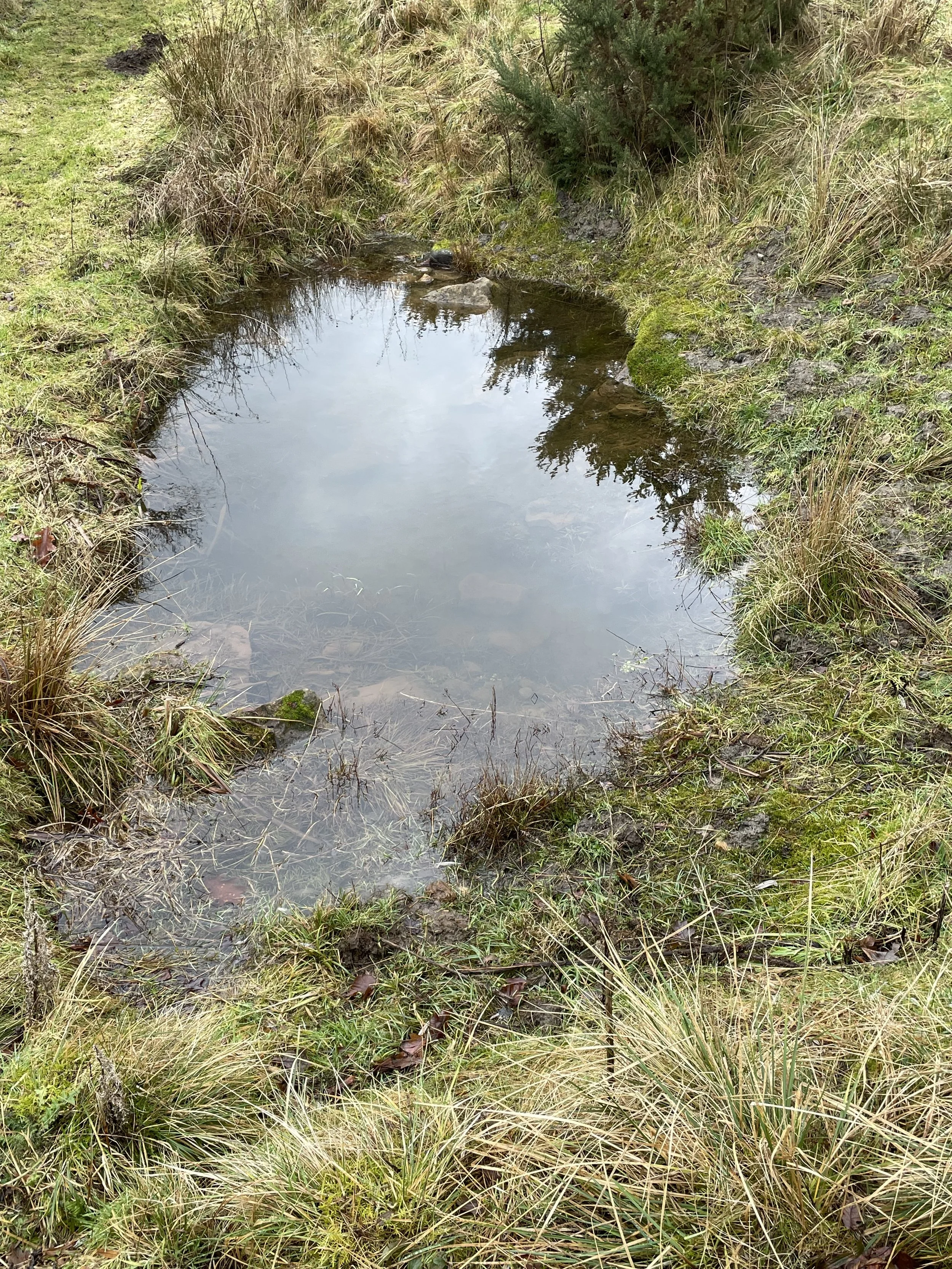
Clare noticed that for the first time ever, Pond Maggiore was dry. Pond Arido.
14th August
John is having great fun with a new plant identification app. He has started mapping the trees on Liddells. This could take him a while. He learned that the trees in the north-west corner of the Pit Wood, thus far assumed by John and Clare to be English Elms, are in fact Wych Elms, otherwise known as Scotch Elms. Geographically this makes sense. The leaf is larger and more rounded than that of the English Elm and the bark smooth and grey as opposed to brown and cracked.
Clare worked her way along the Pit Wood paths making them less hazardous and prickly for visitors.
John told Clare that he had noticed a Spotted Flycatcher near the Story-telling Circle, flying from the fence there. Before Clare left to walk home she wandered along to have a look and spent a happy quarter of an hour watching an adult and two juveniles doing what it says on the tin. One was using the stile post as its regular perch. Clare had the sense that the adult bird was supervising the youngsters.
18th August
Clare had moved one of the cameras to focus on the Barn Owl box but only managed to capture lots of footage of wavy Oak branches. A couple of days ago she noticed large bird droppings below the camera post - a bird with a sense of humour no doubt. Accordingly Clare fixed the camera to the tree so that it focussed on the post. No bird obliged, however there were several videos of does. The deer regularly jump from the neighbour’s land onto Liddells and vice versa just near here. The clip shows the west end of the Crag, not a view that will have appeared often, maybe at all, in the Blog.
21st and 23rd August
John and Clare took some of the wildflowers left in the garden at home up to Liddells to plant. The first day they took Great Willowherb, Lady’s Bedstraw and Wild Carrot. The second Salad Burnet. These plants had either evaded or not been big enough for the first planting earlier in the year.
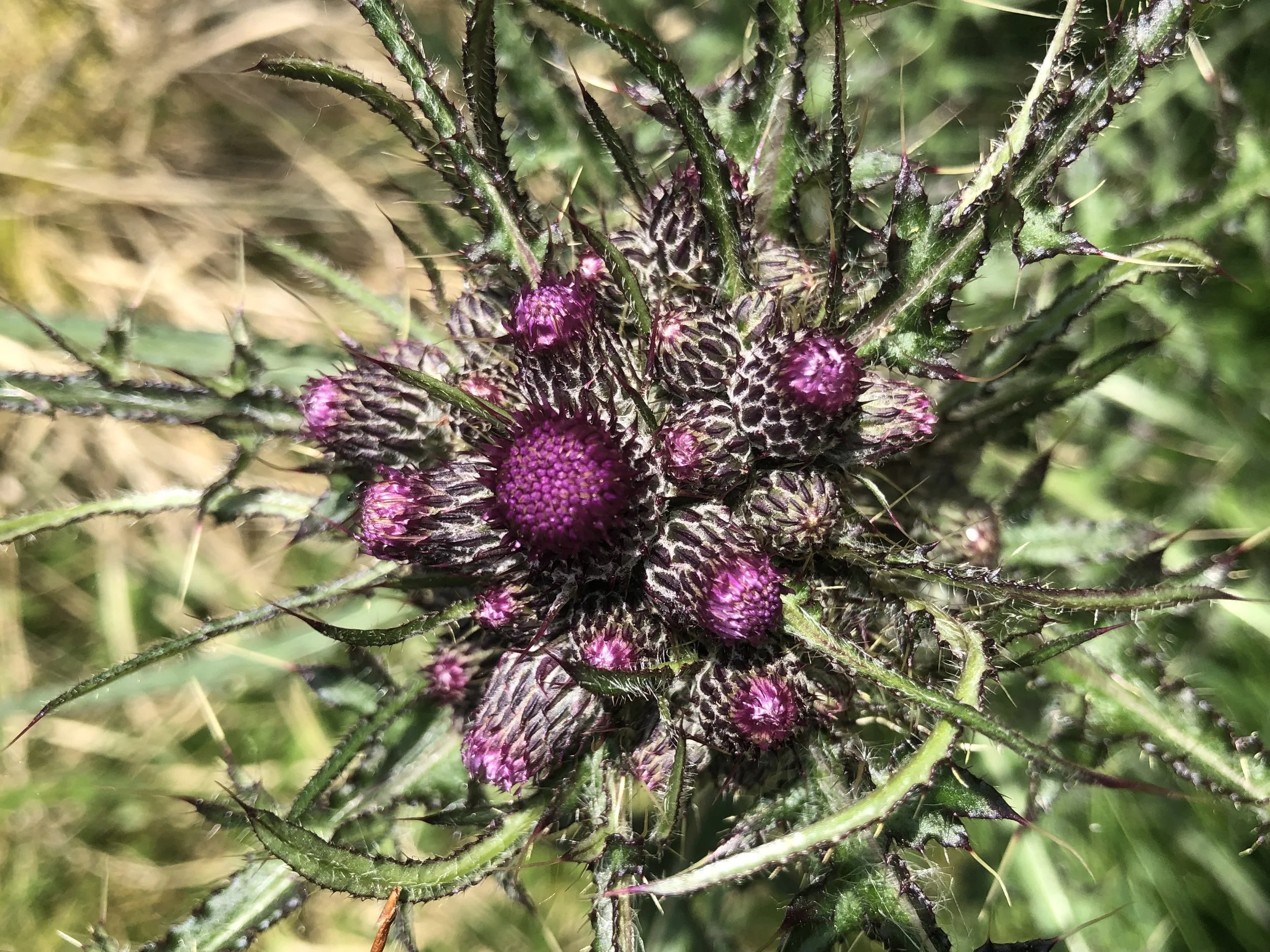
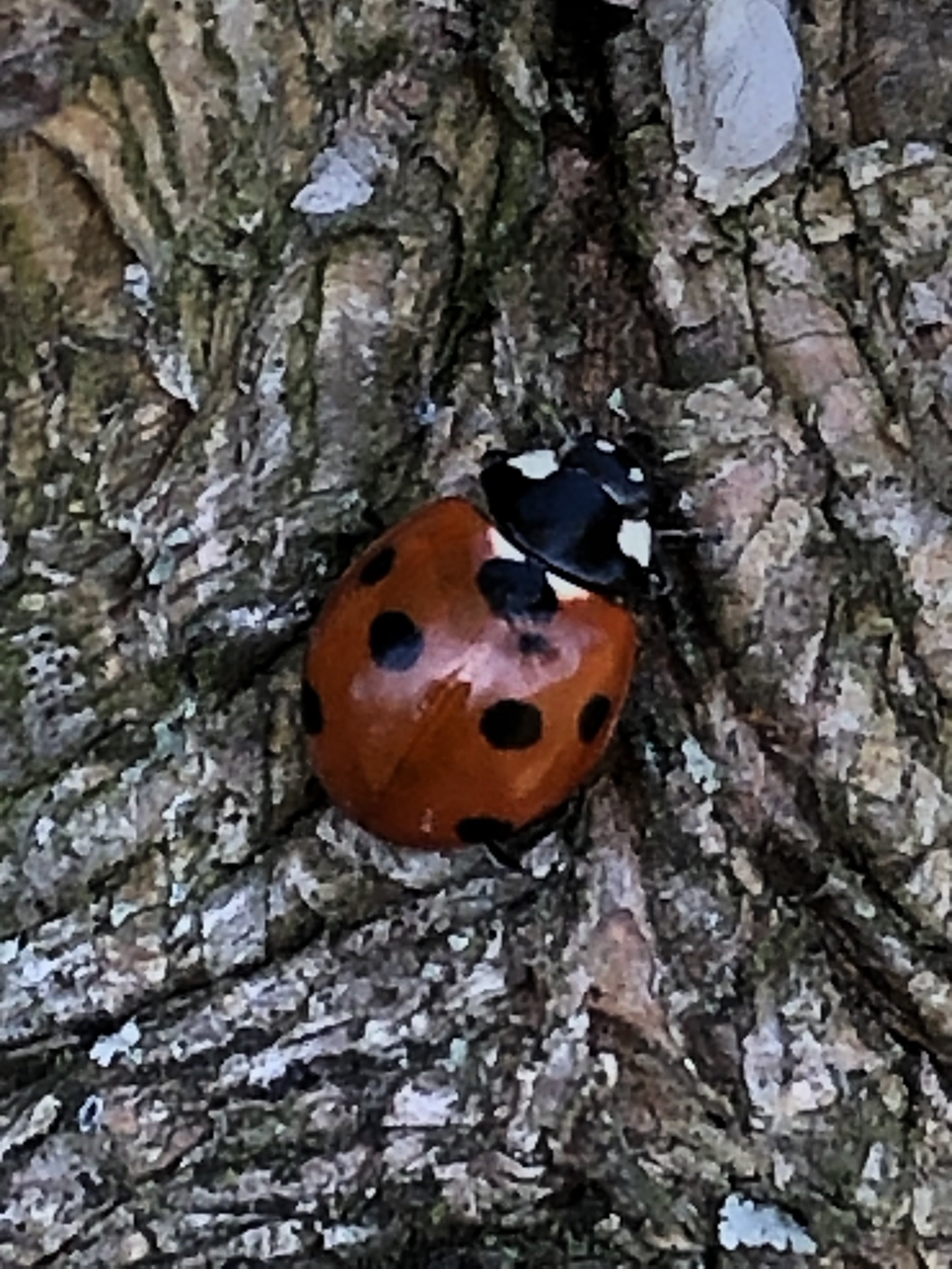
Clare noticed a 7-spot ladybird on a Thistle head.
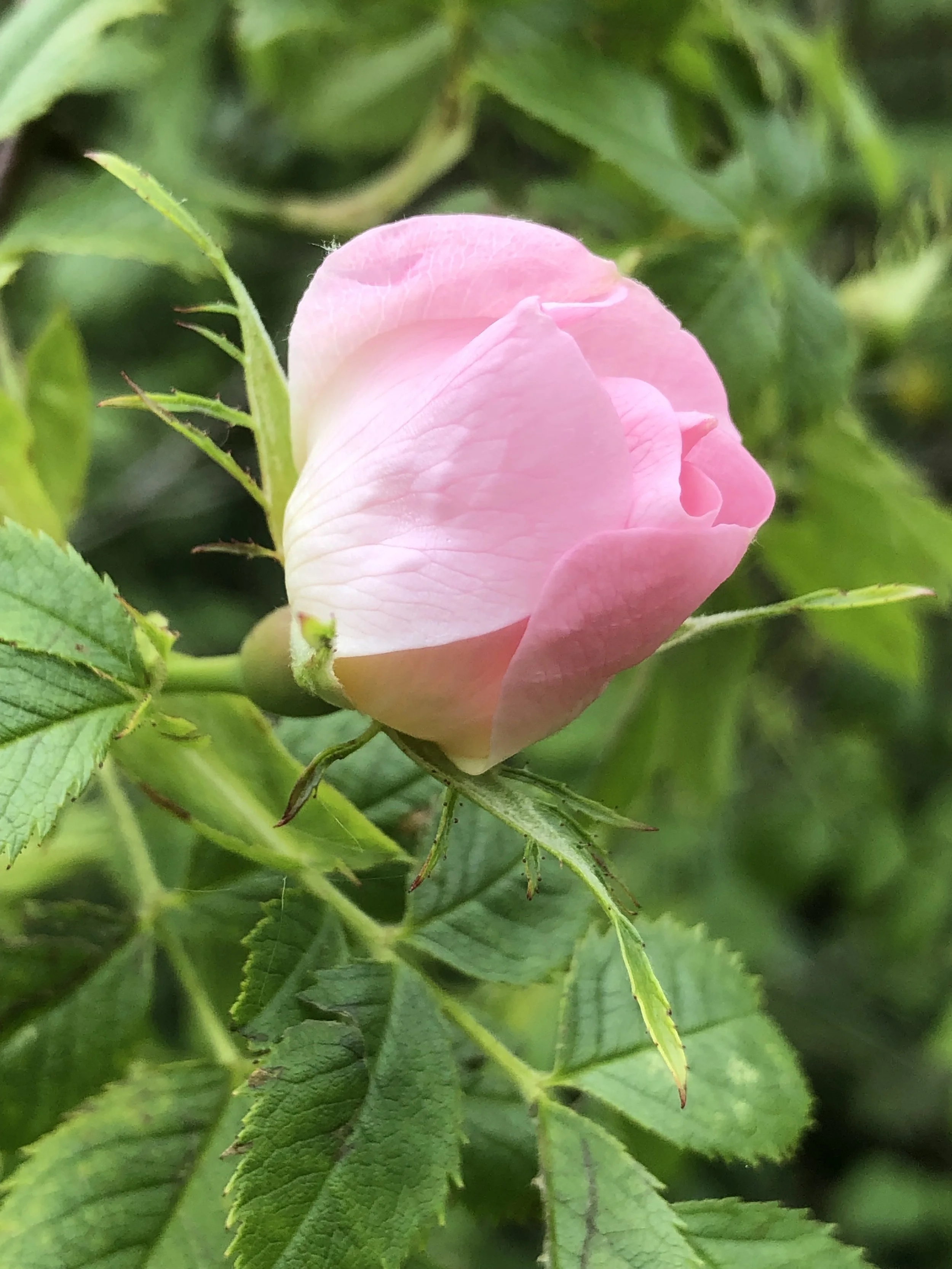
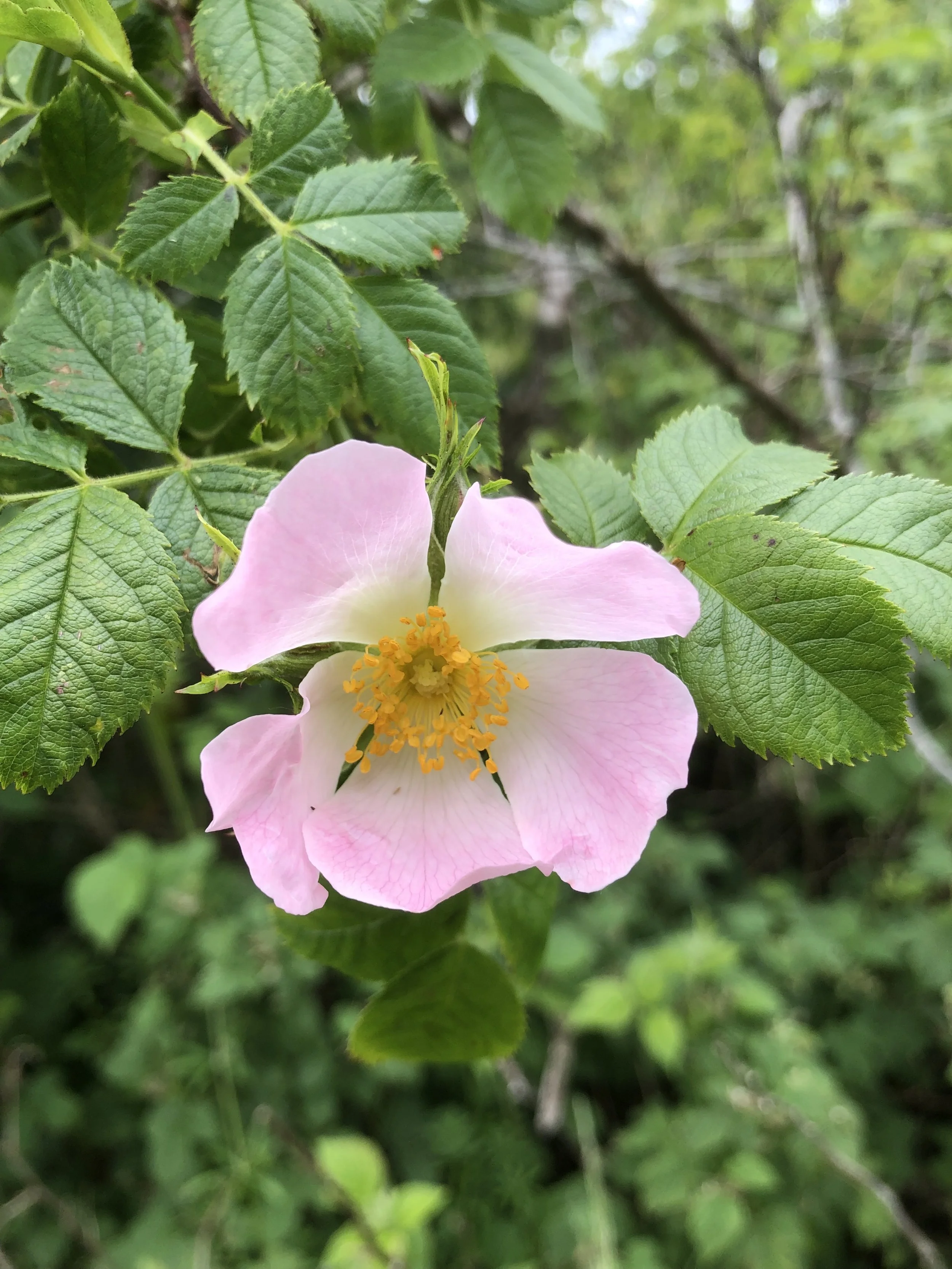
As they left, Clare took a snap of the profusion of rosehips and Rowan berries in the Top Strip. Berries are generally wonderful this year. Clare hopes some of them will make it into a 2026 hedgerow jelly.
Clare has had to adjust the camera in the North-east Strip, the one positioned close to the badger latrine, a couple of times. Now in the right place, the disc has revealed that there are Natterer’s bats here as well as in the Scrub. John and Clare first saw bats in the early days of Liddells, flying around the pathway that leads from here to the Orchard. They then put up a bat box close by, although to their knowledge it wasn’t in use and eventually fell down. John put it back up about recently. It might be worth another check. A badger did appear in the videos though when it pauses it is probably only marking territory and/or urinating. Hares made several appearance. Clare particularly likes the video of one looking like an athlete as it sits up ready for the run up to the boundary wall over which it is about to jump.
24th August
In the early hours of the morning a badger makes its way across the necessarium in the North-east Strip. It checks out the camera before moving on.
A couple of hours later a Tawny Owl is captured in same spot. Maybe it is the ghostly one which appeared in the Scrub earlier this month. It is down to the ground in the position owls adopt when they have caught prey, however the Owl’s movements do not suggest it has anything between its talons. Maybe a small mammal had a lucky escape on this occasion.
26th August
A doe makes her way through the North-east Strip early in the morning and returns close to midnight. She notices the camera and pauses on the way back.
At last the camera captures the badger demonstrating the use of the Necessarium. Clare would like it to be known that the video title is John’s idea; she is more mindful of the invasion of the badger’s privacy.
27th August
The does may well be pregnant by now if the buck has been successful. He can give his full attention to browsing. At an angle - the camera has slipped.
I love that the last video has gone somewhat askew and that it features the old buck - an animal that has been around Liddells for many years now. I know that some of you have heard that our lives have taken a devastating turn. I have had a brutal diagnosis and know I will no longer have the time or the focus to maintain the Blog. I am inordinately sad to bring it to a close. You may remember that the origin of using the third person narrator was when my daughter Mathilda created the website for John and me, and translated the Liddells diary I had kept, into the Blog. It made perfect sense for her to write ‘John and Clare …’, and I decided to maintain that. I didn’t want it to be my Blog and it never has been, although those of you who know me will be in no doubt that you are reading my voice. I have absolutely loved creating it with John and with his input and loving support. I have enjoyed incorporating my sense of humour, the sometimes quirky connections I have made, as well as what I hope has been apparent, my love of and learning more about nature.
Liddells is a special place. I will keep going up and let it fill my senses and soul for as long as I can. I have a lovely image of friends coming up in working parties to help John look after the land. I’m sad that I will not be there to provide baked goods.
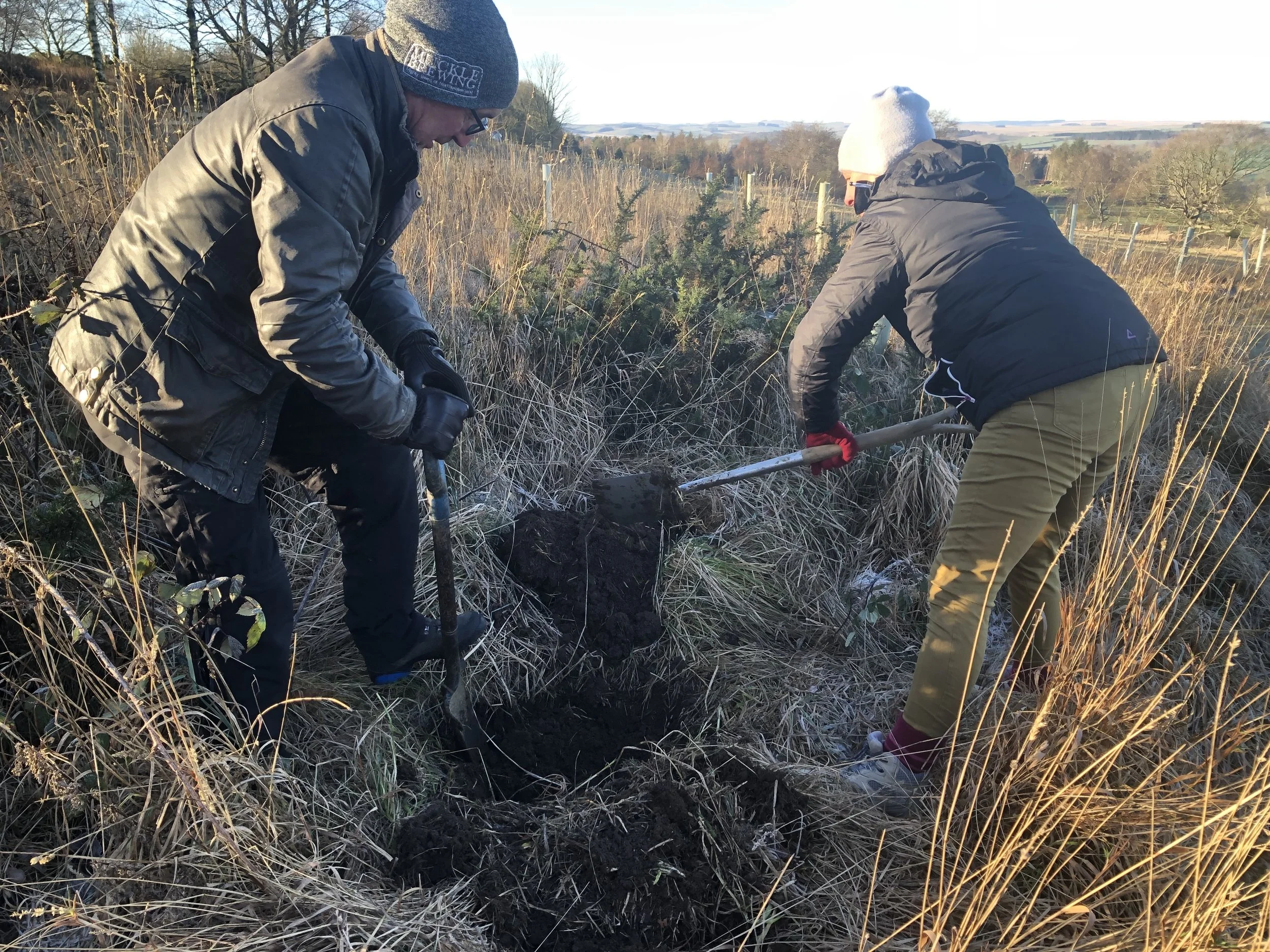
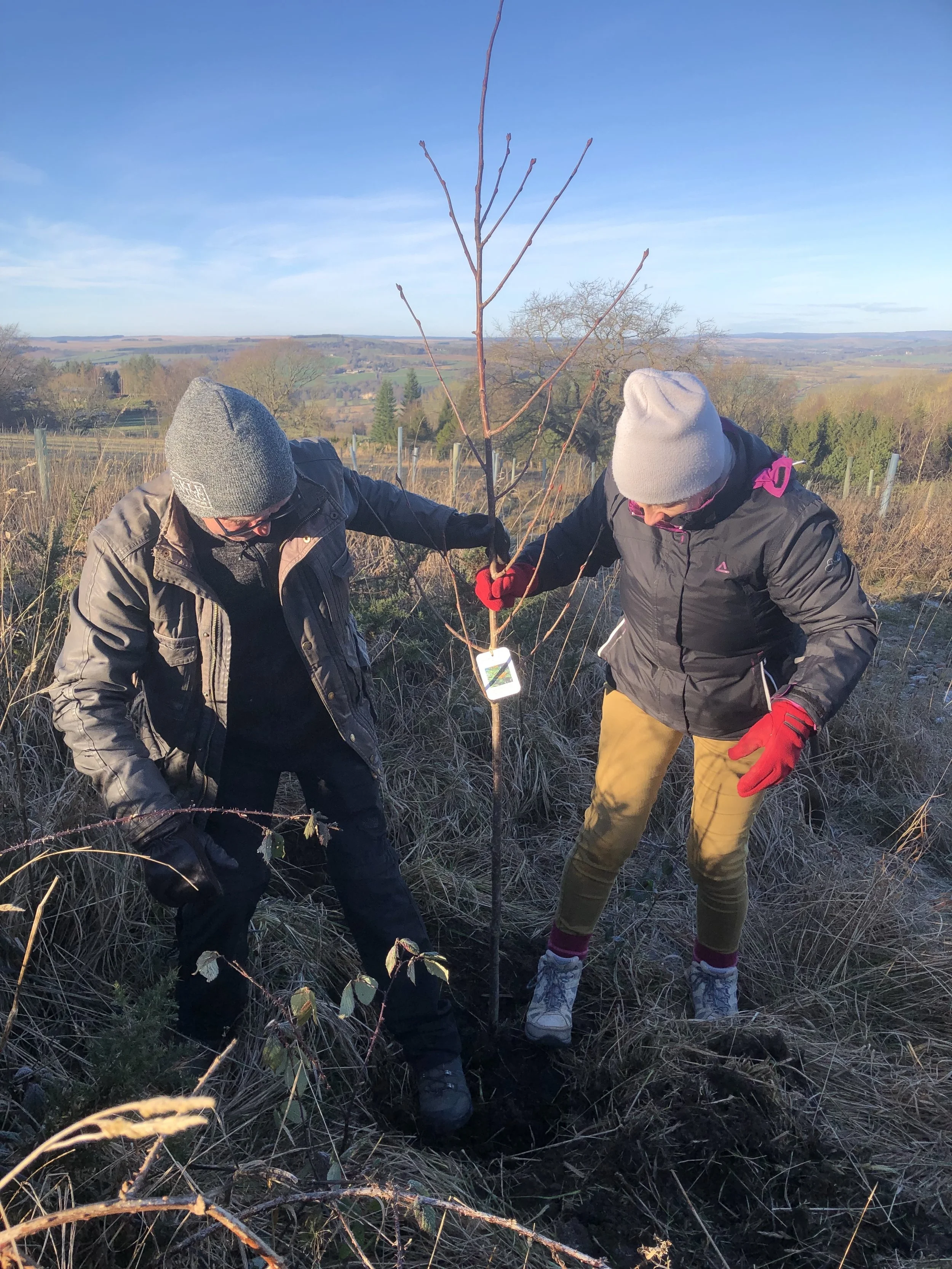
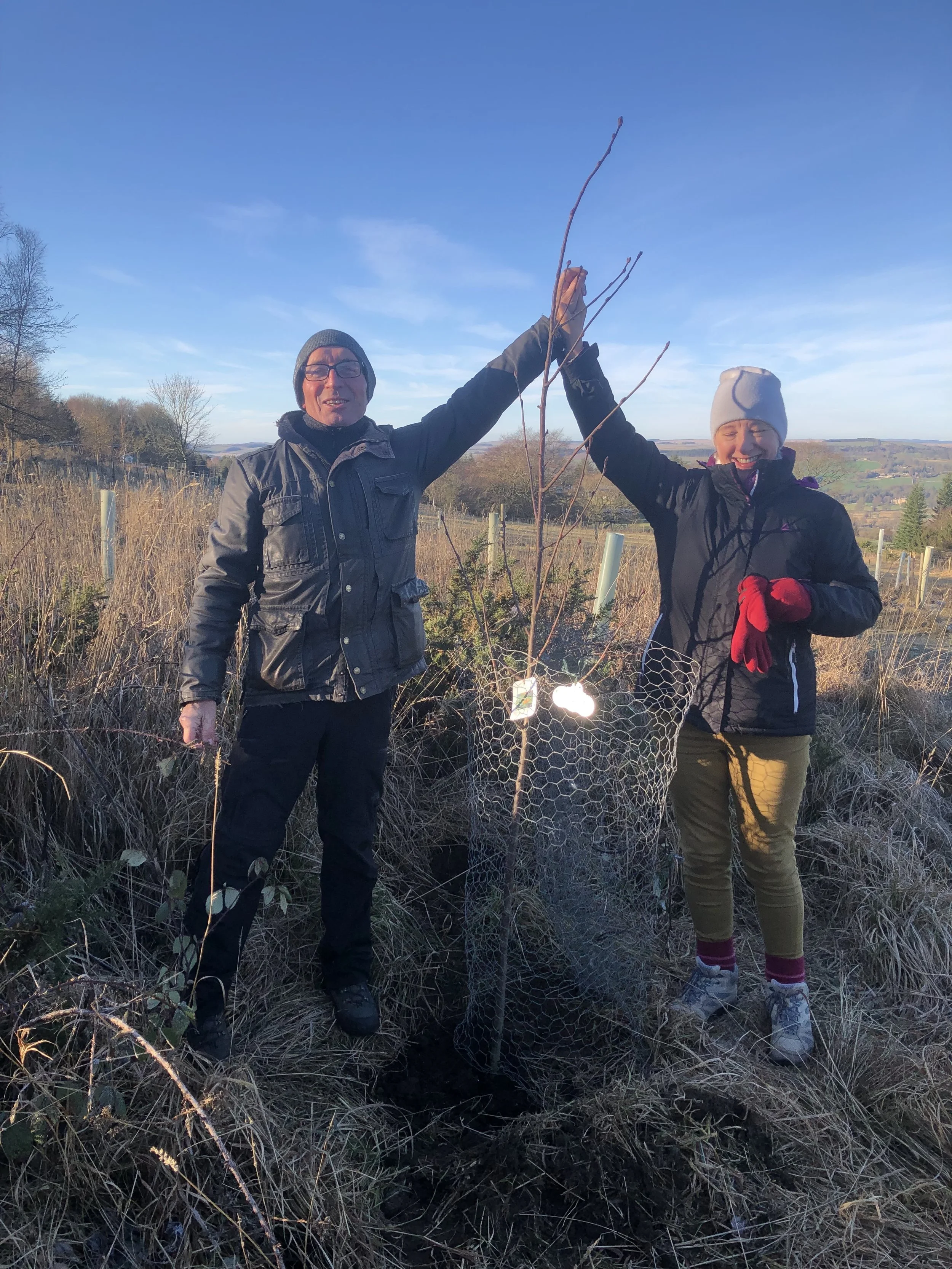
While I am wary of the ideal of perfection, for me, John has had the perfect idea. He has decided that he will plant 500 trees, and he will plant 500 more. Thank you Proclaimers. They trees will become Clare’s Wood. There will be winding paths and glades. The wood will be on what is now the Hayfield, brilliantly solving the annual stress evoked by hay-making. I am profoundly moved by the thought of the wood and know that many of you will be involved with the planting.
Thank you all for reading this and supporting us and Liddells over the years.
Clare and John